Wildberries beyond “Russia’s Amazon”

di Lorenzo Bruno
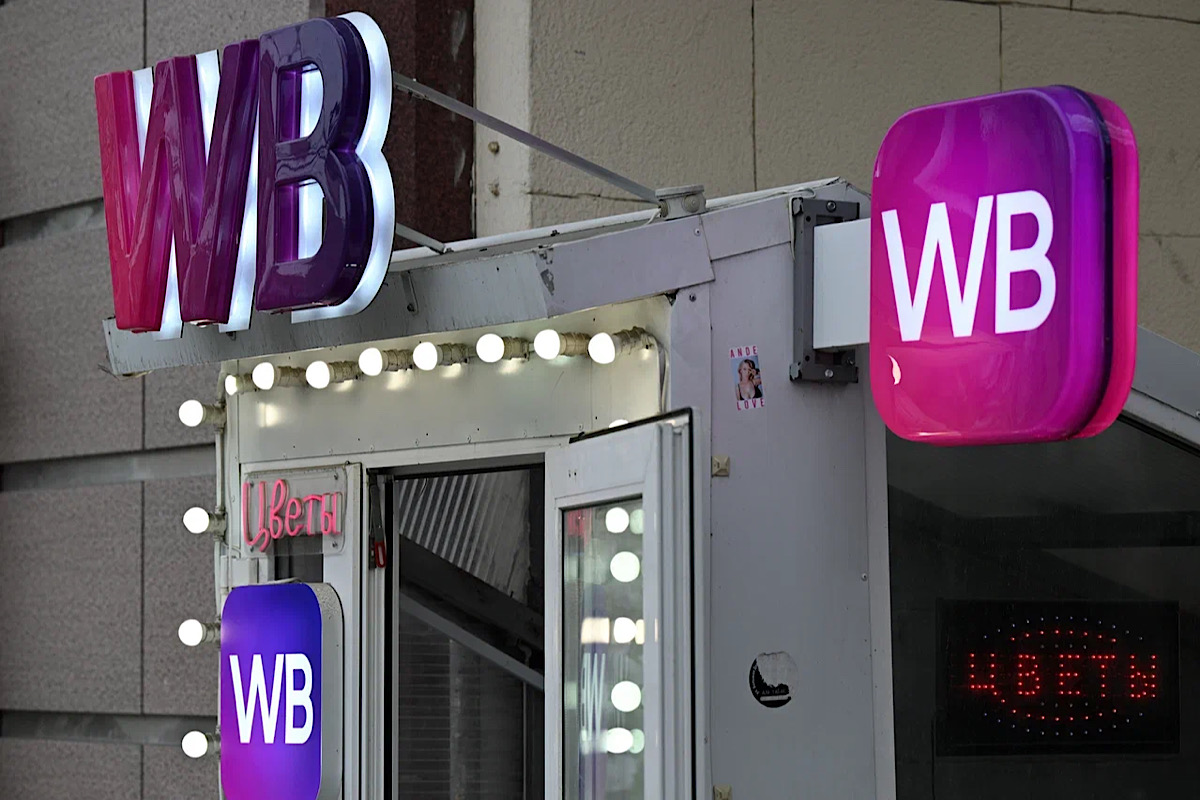
Calling Wildberries “Russia’s Amazon” is useful shorthand for scale, but it no longer explains the company’s role. Wildberries is a marketplace, logistics network, payments platform, infrastructure for hundreds of thousands of sellers, data system and advertising channel. It is also a point of intersection between private capital, state regulation and wartime economic resilience. Ukrainian attacks on sites in its network in July 2026 made an existing transformation visible: a private commercial company had become infrastructure of national relevance, without every warehouse thereby becoming a military object.
THE ATTACKS AND THE PROBLEM OF PROOF
Between 18 and 22 July, Russian and international reporting identified four Wildberries facilities struck in Elektrostal, Kotovsk and the Krasnodar and Stavropol regions. Associated Press reported an aggregate death toll of nine, with numerous injuries. On 23 July, another marketplace warehouse in the Voronezh region was damaged; ownership had not been officially identified, although Wildberries suspended operations there. A three-year-old child was killed in the wider regional attack and should not automatically be counted as a casualty at a verified Wildberries site. Kyiv described the targets as logistics nodes used for military equipment and components, but Zelensky did not name Wildberries in his initial statement. Moscow and the company denied military use of the warehouses.
A rigorous fact-check requires three separate propositions. First, the platform lists dual-use products, including radios, electronics, ballistic protection and goods advertised for the so-called “special military operation”. Second, commercial availability does not prove that the warehouses hit were integrated into a military supply chain. Third, belligerent claims are not independent evidence. Open sources document the commercial, publicly accessible character of the sites and the sale of goods with potential military uses, but do not establish the predominant function of each depot or its legal status in the circumstances of the attack.
FROM A MOSCOW APARTMENT TO A NATIONAL SYSTEM
Wildberries was founded in 2004 by Tatyana Kim, then Tatyana Bakalchuk, with the involvement of her then husband Vladislav Bakalchuk; sources differ on whether they formally describe him as a co-founder. The original online clothing model developed into a general marketplace linking producers, importers, microbusinesses, consumers, couriers and pick-up points. The company says it processes up to twenty million orders a day. Estimates cited by Associated Press put its share near 52 per cent of Russian online orders and its seller base between 500,000 and 800,000. The same source cited more than 200 facilities and 5.2 million square meters, while Reuters used a logistics-space perimeter close to three million; the figures should not be merged without common scope and date.
These figures require careful interpretation. Orders, gross merchandise value, accounting revenue and seller proceeds are not interchangeable. RWB reported 2025 GMV above 6.1 trillion roubles, up 49 percent, investment over 310 billion roubles and IFRS net profit of 175 billion roubles. The disclosure described the IFRS data as unaudited; GMV is not an accounting revenue line. Russia’s Association of Internet Trade Companies estimated the entire 2025 e-commerce market at 11.5 trillion roubles, up 28 percent, with 96.2 percent of sales domestic. None of these indicators directly measure contribution to GDP.
THE PLATFORM AS A RESPONSE TO SANCTIONS
Since 2022, the exit or retrenchment of numerous Western brands, the fragmentation of international payments and the growth of parallel imports have increased the strategic value of domestic marketplaces. Wildberries does not replace global supply chains in full, but it lowers the cost of connecting products, suppliers and consumers across an enormous and uneven geography. In many Russian regions, the pick-up point has become more important than the traditional shop. It aggregates dispersed demand, enables small sellers to reach a national market and makes locations economically serviceable where physical retail would generate insufficient margins.
This function has a geopolitical dimension. A domestic platform retains data on consumption preferences, allocates product visibility, controls seller access and can integrate payments, credit and advertising. In a sanctioned economy, digital sovereignty is not limited to servers and software. It includes the ability to keep distribution and monetization circuits operational. Wildberries is therefore part of Russia’s capacity to absorb external shocks, but its centrality also creates concentration risk. A disruption at a few hubs can propagate through delivery schedules, seller liquidity and household access far beyond the regions physically attacked. The same network effects that create scale and resilience can therefore transmit a local shock into a national one.
THE MERGER WITH RUSS: COMMERCE, ADVERTISING AND POWER
In 2024, Wildberries began a merger with Russ, Russia’s leading outdoor-advertising operator. The RWB joint venture was structured with Wildberries holding 65 percent and Stinn, the company associated with Russ, holding 35 percent. This was not a conventional industrial combination. It brought together transaction data, logistics, pick-up points, advertising inventory and payment capabilities. Its promoters presented the project to President Vladimir Putin as the foundation of a major rouble-based digital infrastructure with potential reach beyond Russia’s borders.
The disparity in economic scale between Wildberries and Russ, and the reduction of Tatyana Kim’s economic position from near-total control of Wildberries to roughly two-thirds of the new structure, triggered an exceptionally violent corporate dispute. Vladislav Bakalchuk alleged a hostile takeover; Tatyana Kim defended the transaction; and Ramzan Kadyrov publicly backed him. A September 2024 shootout at Wildberries’ Moscow headquarters killed two people and wounded several others. A court later rejected the attempt to annul the merger. Political approval and the involvement of powerful groups do not prove covert Kremlin control, but they show that national-scale digital assets have become matters of economic security.
THE VTB AXIS AND THE FINANCIALISATION OF THE MARKETPLACE
In May 2026, RWB and VTB, Russia’s second-largest lender and a majority state-owned bank, announced a strategic partnership; by July, Reuters reported that VTB had acquired 5 percent of WB Bank, with an option to increase the stake. Combining bank branches with Wildberries pick-up points could create one of the country’s broadest physical networks, while RWB contributes technology, artificial intelligence, payments infrastructure and access to tens of millions of users.
The move is strategic because it shifts Wildberries from commerce towards embedded finance. The marketplace can observe sales, returns, inventory turnover and customer behavior; a bank can convert that data into consumer credit, seller finance, payments management and savings products. The platform no longer merely intermediates a transaction. It can finance both sides, determine commercial ranking and monetize the relationship over time. This is the universal-platform model, closer to Asian ecosystems than to Amazon’s original retail architecture.
SANCTIONS AND REGULATION: THE BOUNDARY BETWEEN MARKET AND STATE
Deeper financial integration has increased international exposure. In 2026, the European Union placed Wildberries Bank under a transaction ban applicable from 24 May. The United Kingdom designated the bank under its Russia regime, including an asset freeze and specified financial restrictions. Those measures should not automatically be extended to the whole marketplace: the entity named in the legal acts is Wildberries Bank, and consequences for affiliates, contracts and indirect dealings must be assessed under the relevant jurisdiction.
Domestically, Federal Law No. 289-FZ of 31 July 2025, effective from 1 October 2026, regulates relations among platforms, sellers, pick-up points and consumers. It recognizes that marketplaces exercise private regulatory power: they alter commissions, suspend accounts, set logistics standards and allocate contractual risk. From 7 July, Wildberries included drone attacks and sabotage in force-majeure clauses, in principle excluding liability for specified losses. After the strikes, however, it announced voluntary support and payments to tens of thousands of vulnerable sellers. The coexistence of contractual exemption and discretionary relief shows who controls risk allocation.
TO STRIKE WILDBERRIES IS TO STRIKE A NETWORK OF SMALL BUSINESSES
A marketplace warehouse does not contain only the platform’s capital. It contains inventory owned by thousands of sellers, often very small businesses that depend on one channel for sales, advertising, payments and logistics. Destruction interrupts cash flow, erases stock, increases returns and delays, and may destabilize firms geographically remote from the conflict. Concentration creates efficiency in peacetime and vulnerability in war.
From this perspective, one possible strategic purpose of the attacks – not provable from open sources alone – extends beyond destroying individual military components. Striking a network such as Wildberries can transfer the cost of war into daily life, demonstrate the penetrability of Russian territory and force the government to allocate defenses among civilian infrastructure, energy assets and the front. It can also pressure sellers and consumers who had experienced the conflict mainly through prices, availability and mobilization. This is an analytical interpretation, not a fact that can be attributed with certainty to Ukrainian planning.
THE DANGER OF CONFUSING STRATEGIC INFRASTRUCTURE WITH A MILITARY OBJECTIVE
Wildberries’ economic importance does not automatically make every warehouse a lawful military objective. Under the law of armed conflict, an object’s nature, location, purpose or use must make an effective contribution to military action, and its destruction must offer a definite military advantage in the circumstances prevailing at the time. Even if that threshold is met, proportionality and precautions still apply foreseeable civilian harm must not be excessive in relation to the concrete and direct advantage, and all feasible measures must be taken to reduce it. Without independent information about each site, no conclusion on lawfulness is possible. Dual-use logistics complicates distinction; it does not abolish it.
THE ALGORITHM AS A FORM OF PLANNING
The concentration of demand, supply and data gives the platform a quasi-planning function. Prices, promotions, rankings and logistics availability influence which goods are produced, imported and distributed. The idea echoes a thesis advanced by Kremlin economic adviser Maxim Oreshkin, who has described platform algorithms as instruments of economic coordination. This is not Soviet state planning, but private coordination subject to regulatory, financial and informational pressure. In a Russia partly disconnected from Western circuits, that allocation capacity has political as well as commercial value.
“RUSSIA’S AMAZON” HAS BECOME SOMETHING DIFFERENT
Wildberries has logistics redundancy and can redistribute orders, but no general public guarantee eliminates losses for the platform or its sellers. The attacks make greater investment in warehouse dispersal, passive defense, business continuity, data recovery, insurance and sensitive-goods tracking more likely. They may also provide the government with an argument for tighter control over platforms, sellers and information flows.
The label “Russia’s Amazon” remains effective, but it obscures the model’s distinctiveness. Wildberries is a market, logistics infrastructure, territorial network, operating and expanding financial ecosystem, advertising system and instrument of national resilience. It grew by reducing Russia’s economic distances; it became a target because those distances converge in concentrated nodes. Its history illustrates a rule of digital geopolitics: when a platform becomes indispensable to daily life, it does not cease to be private but enters the state’s strategic perimeter and the adversary’s military calculus.